

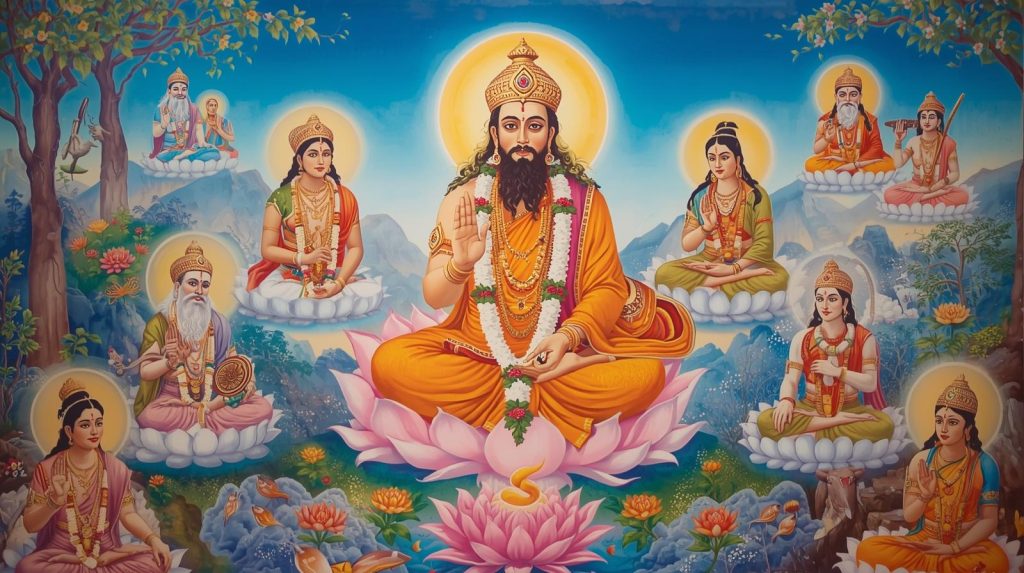
Jainism, one of the world’s most ancient religions, has been guided by the lives and wisdom of 24 Tirthankars. Among them, Tirthankar Anantnath Swami, the 14th Tirthankar, holds a special place in Jain history and philosophy. His name “Anantnath” translates to Lord of Infinity, symbolizing boundless virtues and infinite compassion. His teachings serve as a beacon of light for those seeking liberation (moksha) through self-discipline, non-violence (ahimsa), and truth (satya).
Birth and Early Life
According to Jain traditions, Anantnath Swami was born during the Ikshvaku dynasty in Ayodhya, a city deeply revered in Indian culture. His father was King Simhasen and his mother was Shri Suyasha Devi. From his childhood, Anantnath exhibited extraordinary wisdom, calmness, and detachment from worldly pleasures. These qualities distinguished him as a spiritual soul destined to guide humanity.
Renunciation and Spiritual Path
Like every Tirthankar, Anantnath eventually renounced worldly life to pursue higher truth. Leaving behind his royal comforts, he embarked on a journey of self-discipline and penance. Through deep meditation, strict adherence to vows, and inner purification, he attained Keval Gyan (absolute knowledge).
This state of infinite wisdom and perception freed him from the cycle of birth and death, making him an enlightened teacher capable of guiding others toward liberation.
Teachings of Anantnath Swami
- Ahimsa (Non-Violence):
Anantnath emphasized non-violence in thought, word, and action as the highest virtue. True peace, he taught, can only be achieved when one refrains from harming any living being. - Satya (Truth):
Speaking and living by truth were considered essential for spiritual growth. He believed truth brings clarity, integrity, and inner freedom. - Aparigraha (Non-Possession):
Anantnath taught that attachment to material possessions binds the soul to suffering. Renunciation and simplicity pave the way for liberation. - Self-Discipline:
Discipline in food, conduct, and thought strengthens the path to enlightenment. He encouraged restraint as a tool for spiritual progress. - Path to Moksha (Liberation):
By practicing the three jewels of Jainism—Right Faith, Right Knowledge, and Right Conduct—one can break free from the endless cycle of rebirth and attain eternal bliss.
Legacy and Worship
Temples dedicated to Anantnath Swami stand as reminders of his eternal wisdom. Devotees celebrate his life through rituals, meditation, and festivals. His teachings remain a cornerstone of Jain ethics, inspiring individuals to lead lives filled with compassion, mindfulness, and truth.
Even in today’s fast-paced world, Anantnath’s message resonates as a call for peace, sustainability, and spiritual awakening.
Conclusion
The life and teachings of Tirthankar Anantnath Swami are timeless. His emphasis on non-violence, truth, and detachment continue to hold relevance for modern society, offering solutions to conflicts, stress, and material overindulgence. Following his path is not merely a religious journey but a universal guide to living a life of harmony and purpose.